
Custom Closets vs Modular Systems: What's Worth It in the GTA?
Built-in custom closets or an off-the-shelf modular system? A straight comparison of fit, materials, cost and long-term value for Greater Toronto Area homes — and how to decide which is right for you.
Written by the Panda Reno design and workshop team: custom cabinet makers designing, building and installing across the Greater Toronto Area.
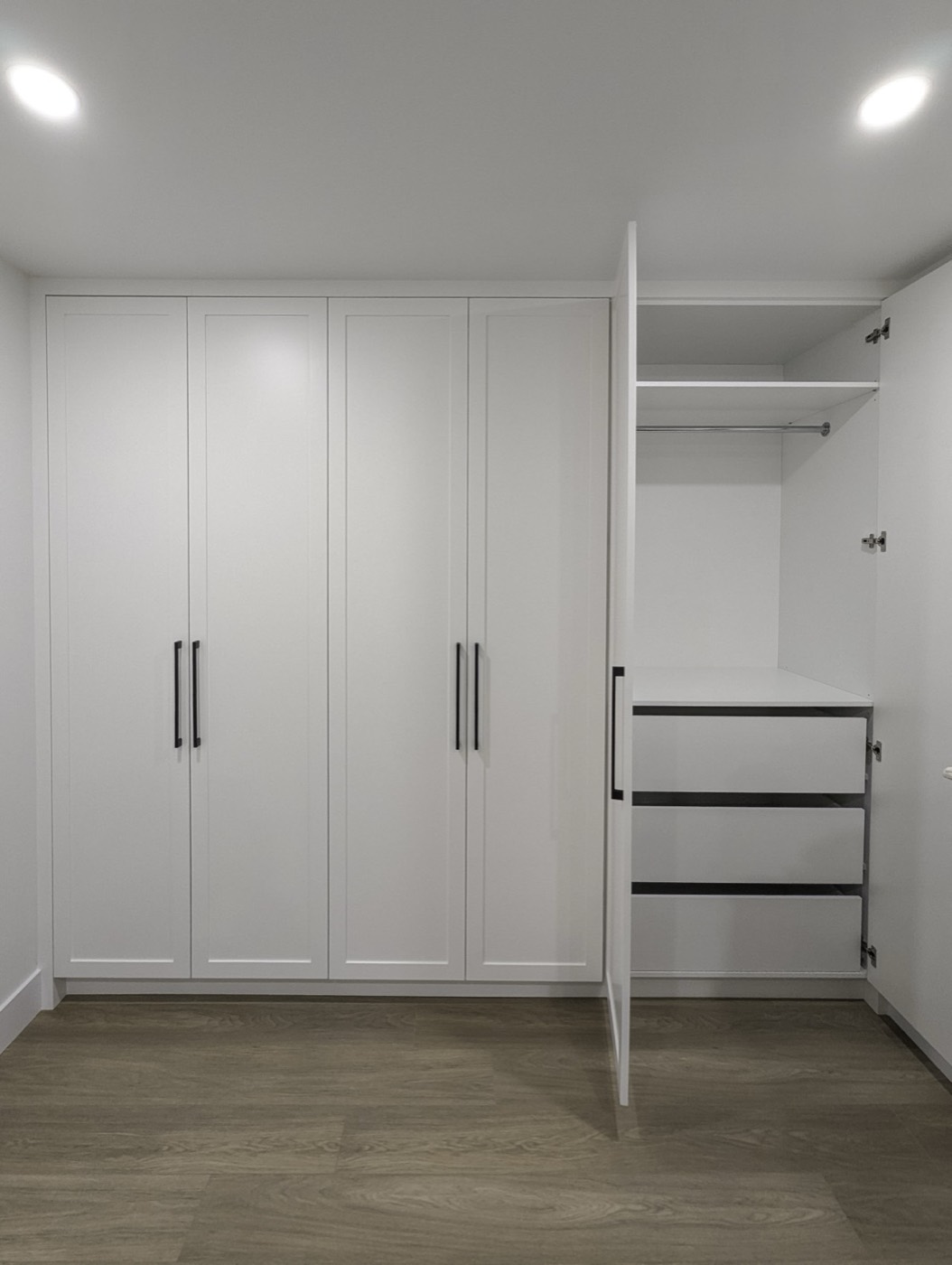
If you have started pricing closet storage in the GTA, you have probably run into two very different worlds. On one side are modular systems — the flat-pack wardrobes and wire or panel kits you assemble or have installed from standard parts. On the other are custom built-in closets, designed for your exact room and built in a shop. Both can organise your clothes. They are not, however, the same product, and the right choice depends on your space, your budget and how long you plan to stay.
We build custom closets, so we have a point of view — but the honest answer is that modular systems are the smart choice for some situations and a false economy in others. Here is a clear-eyed comparison to help you decide.
What "modular" actually means
Modular closet systems are built from standard, pre-sized components: hanging rails, shelves, drawer units and towers that come in fixed widths and heights. Think IKEA PAX, wire-shelving kits, and the panel-based systems sold by big-box and closet franchises. You combine catalogue modules to roughly fit your space, and any gaps are covered with filler panels or simply left open.
The appeal is real: modular is cheaper up front, faster to get, and — for a simple reach-in closet with a standard opening — often perfectly adequate. If you are outfitting a rental, a kid's room that will change in five years, or a straightforward closet where budget is the priority, a good modular system can be exactly right.
What "custom" actually means
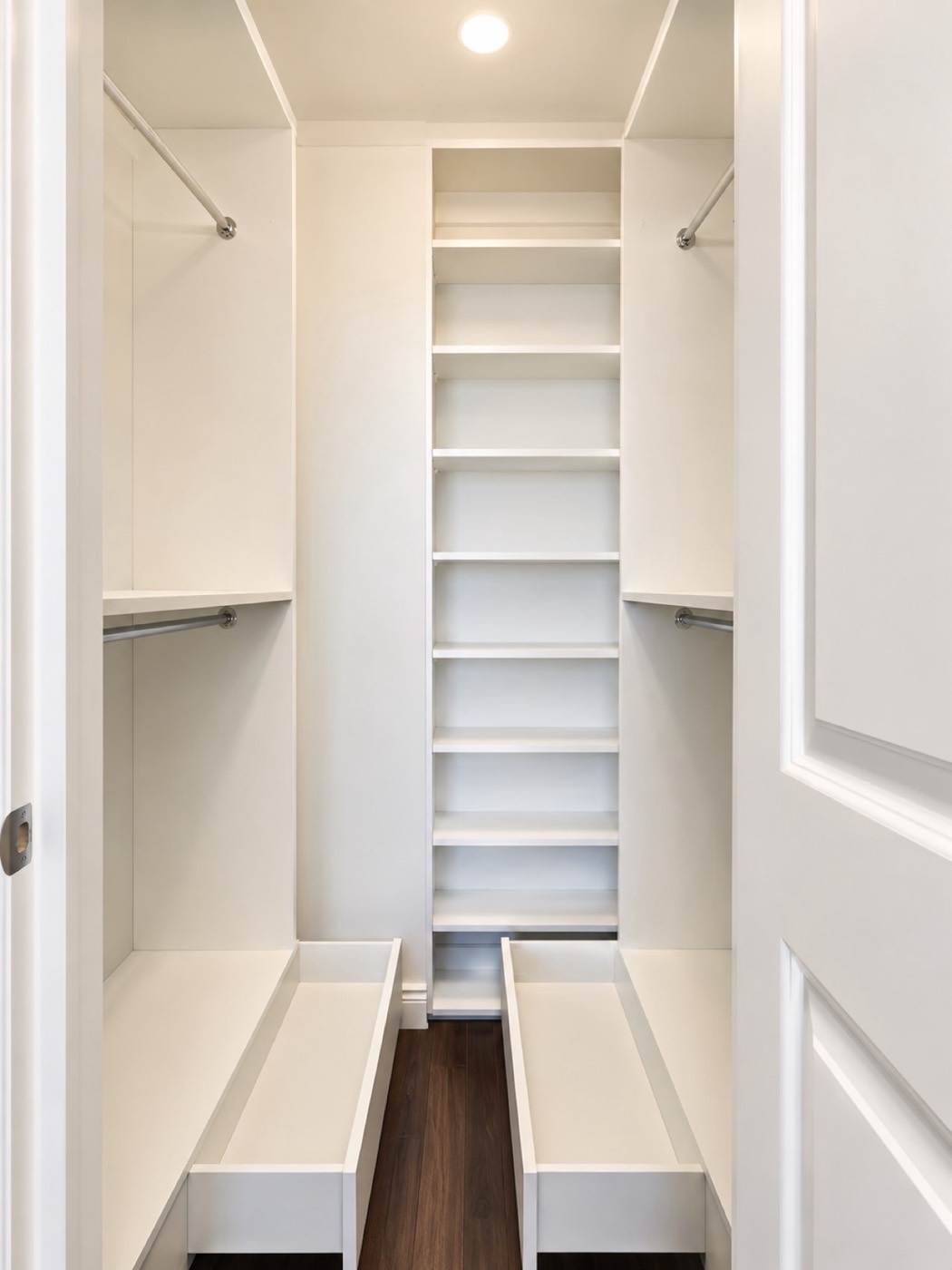
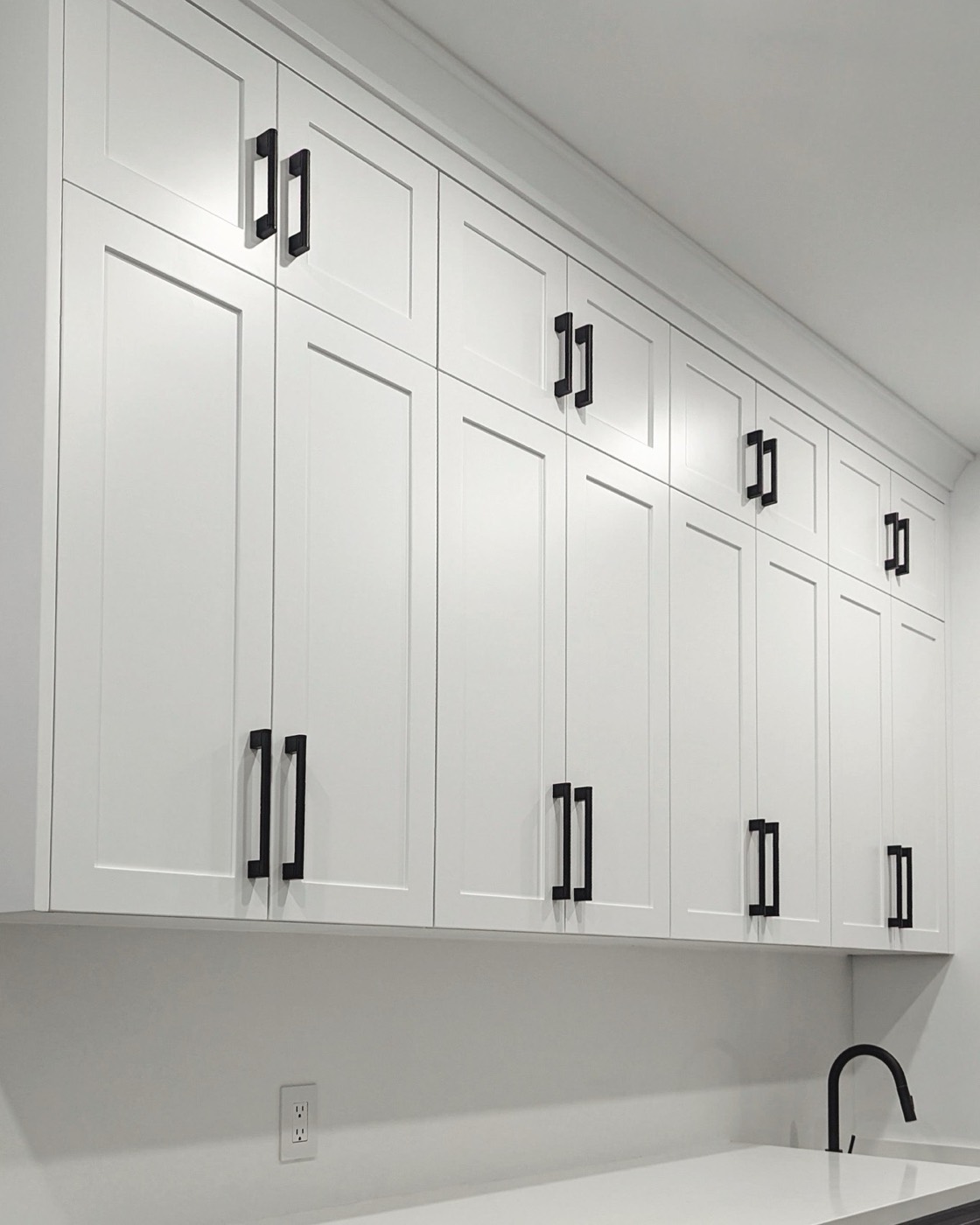
A custom closet is designed for your specific room and built to those dimensions — floor to ceiling, wall to wall, scribed to the actual (rarely square) walls of a GTA home. Instead of choosing the nearest catalogue size, you get the exact mix of long-hang, double-hang, drawers, shelving and specialty storage your wardrobe needs, with no wasted gaps and no filler strips.
At Panda Reno, custom also means it is made in our own shop — designed, milled, finished and installed by one team since 2018. That is where the durability and the fit come from: solid construction, soft-close full-extension hardware as standard, and interiors held to the same standard as the doors.
Fit: the biggest practical difference
This is where the two part ways. Modular modules come in fixed widths, so in a real room you almost always end up with dead space — a 60 cm gap beside a 90 cm tower, filled with a blank panel or left empty. Angled ceilings, bulkheads, chimney breasts and out-of-square walls, all common in older Toronto and GTA homes, are exactly what catalogue systems handle worst.
Custom cabinetry is drawn to the room, so every inch is used and the closet reads as built-in architecture rather than furniture pushed into a space. In a small closet that efficiency can mean noticeably more usable storage; in a primary walk-in it is the difference between a boutique dressing room and a collection of mismatched units.
Materials and durability
Most modular systems are built from melamine-faced particleboard with cam-lock fittings. It is fine for light use, but it can sag under weight over time, and the fixings loosen with repeated assembly or heavy drawers. Wire systems are durable but basic, and rarely feel considered.
Custom closets are built from sturdier substrates and better hardware, with backs, edges and drawer boxes engineered to carry real loads for years. If you have ever had a flat-pack wardrobe shelf bow or a drawer runner fail, you already know the difference — and in a closet you open every single day, that difference compounds.
Cost: what each really runs in the GTA
Modular is cheaper, full stop. A flat-pack reach-in can be a few hundred dollars; a larger PAX-style wardrobe wall might run one to three thousand dollars supplied, plus installation. Franchise panel systems sit higher, often a few thousand dollars for a walk-in.
As a 2026 guide, a custom closet in the GTA typically runs about $3,000–$6,000 for a well-appointed reach-in, $6,000–$12,000 for a built-in wardrobe wall, and $8,000–$15,000 for a small walk-in, rising to $15,000–$35,000 or more for a large dressing room with an island, integrated lighting and specialty storage. You are paying more — for exact fit, better materials, and a piece built and installed by one team to last. The question is not which is cheaper (modular always is) but which is worth it for your situation.
Resale and long-term value
For a home you plan to keep, custom closets earn their premium through daily use and durability, and a well-designed primary walk-in is a genuine selling feature in the GTA market. Modular systems, by contrast, are essentially furniture — buyers rarely value them, and they often leave with the previous owner.
If you are staying five-plus years, or the closet is in a primary suite or a home you are renovating to a high standard, custom usually makes sense. If you are in a starter home or a space you expect to change soon, modular may be the smarter allocation of budget.
How to decide
Choose modular when the closet is simple and standard, the budget is tight, or the space is temporary — a rental, a child's room, or a reach-in you just need to function. Choose custom when the space is awkward or unusual, when you want to use every inch, when materials and longevity matter, or when the closet is part of a home you are investing in for the long term.
And you do not have to guess. Our free in-home consultation across the GTA starts with an honest inventory of your wardrobe and space — and if a good modular system would genuinely serve you better, we will say so.
Related pages
Thinking about a project?
Let’s turn the idea into cabinetry.
Book a free consultation and we’ll talk through what’s possible for your space across the GTA.