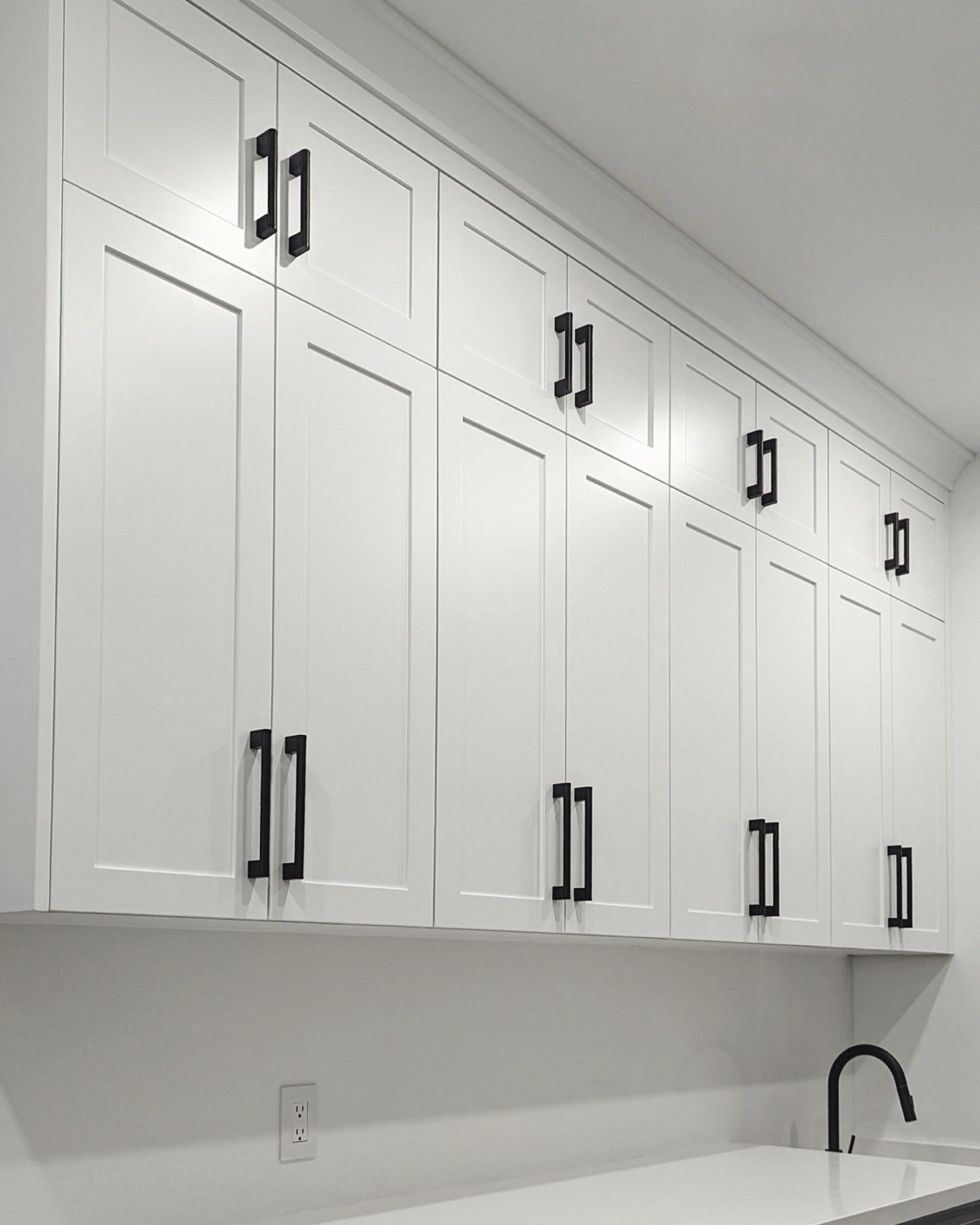

Painted vs Stained Kitchen Cabinets: How to Choose the Right Finish
Painted, stained or natural wood? We compare how each kitchen cabinet finish looks, wears, ages and repairs, explain hardwax oil vs lacquer and shop-sprayed vs site-painted finishes, and show which suits Toronto and GTA homes, from century houses to condos.
Written by the Panda Reno design and workshop team: custom cabinet makers designing, building and installing across the Greater Toronto Area.
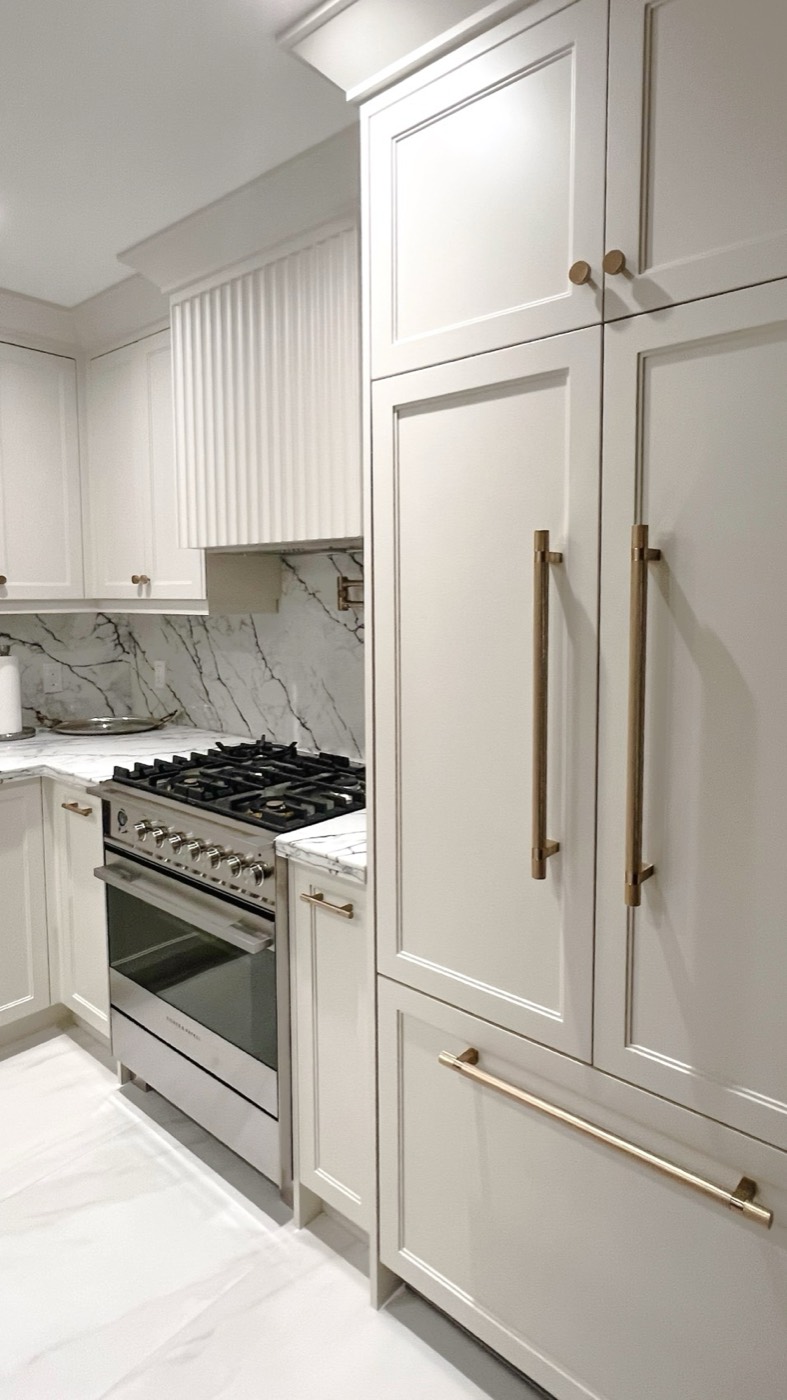
Painted vs stained cabinets is one of the first big decisions in a custom kitchen, and it shapes much of what follows: the door style, the material underneath, the hardware and how the room will look fifteen years from now. We finish painted, stained and natural wood in our own shop and see how each holds up once a family starts cooking.
There is no universal best finish for kitchen cabinets. There is a best finish for your house, your household and the amount of upkeep you are happy with. Below we compare how each looks, wears, ages and repairs, what drives cost, and how to combine them.
Painted, stained and natural: what each finish really is
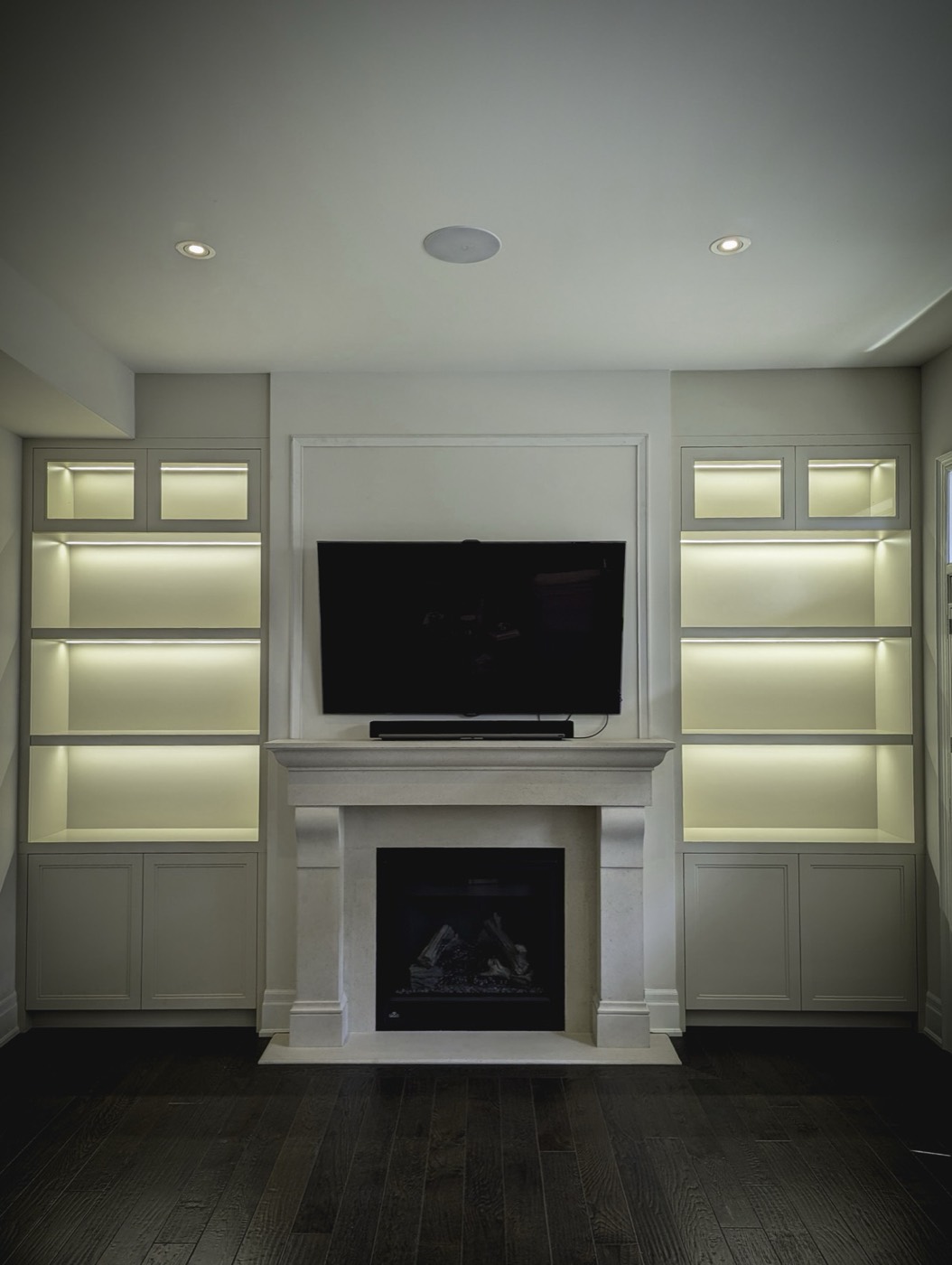
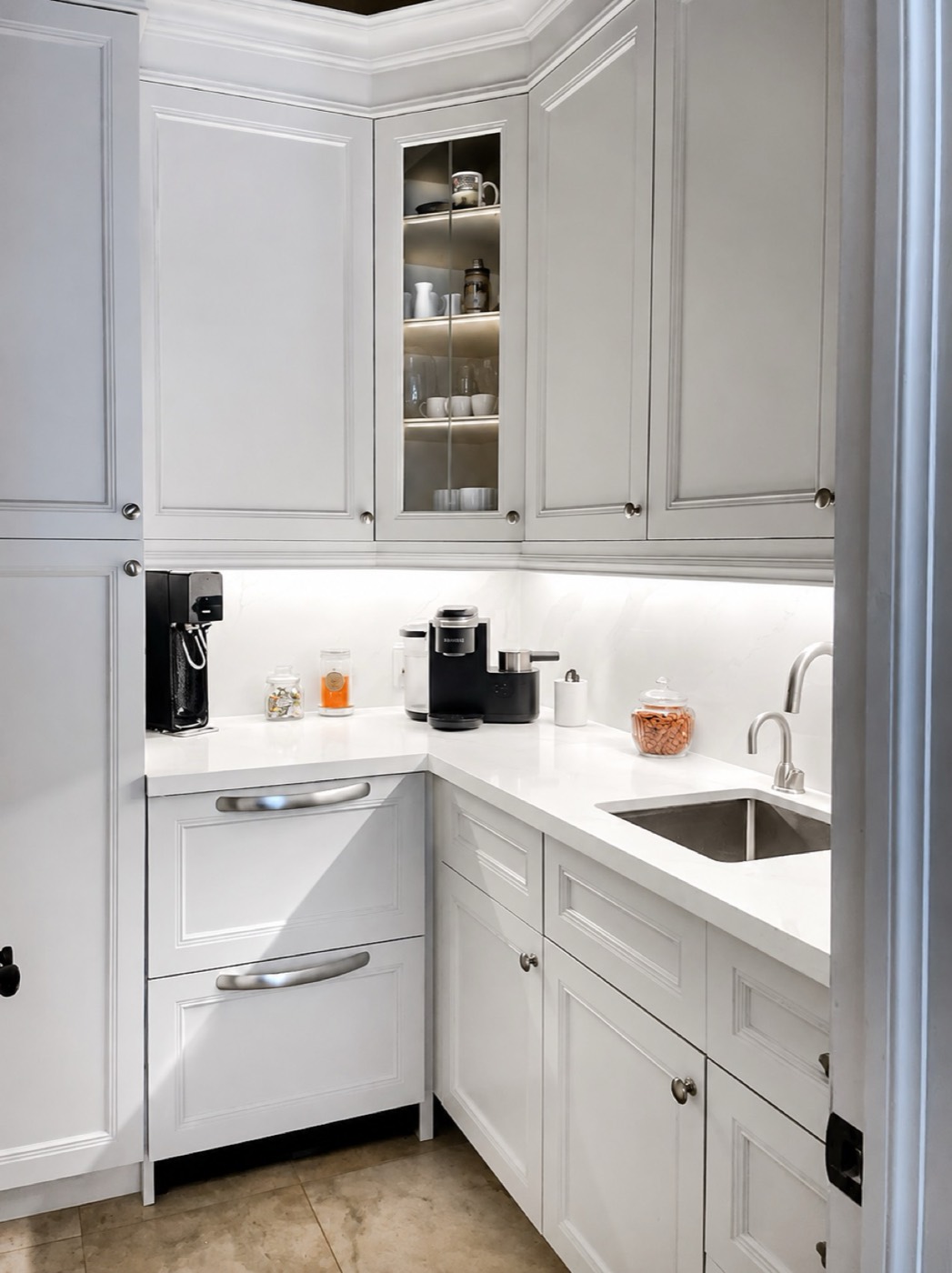
Painted cabinets in a custom kitchen are rarely painted with a brush. The finish is usually a pigmented lacquer sprayed in several coats over primer, sanded between coats for a smooth, even surface. Our Traditional Cream Kitchen in Richmond Hill, for example, pairs inset shaker doors with a hand-sprayed cream lacquer.
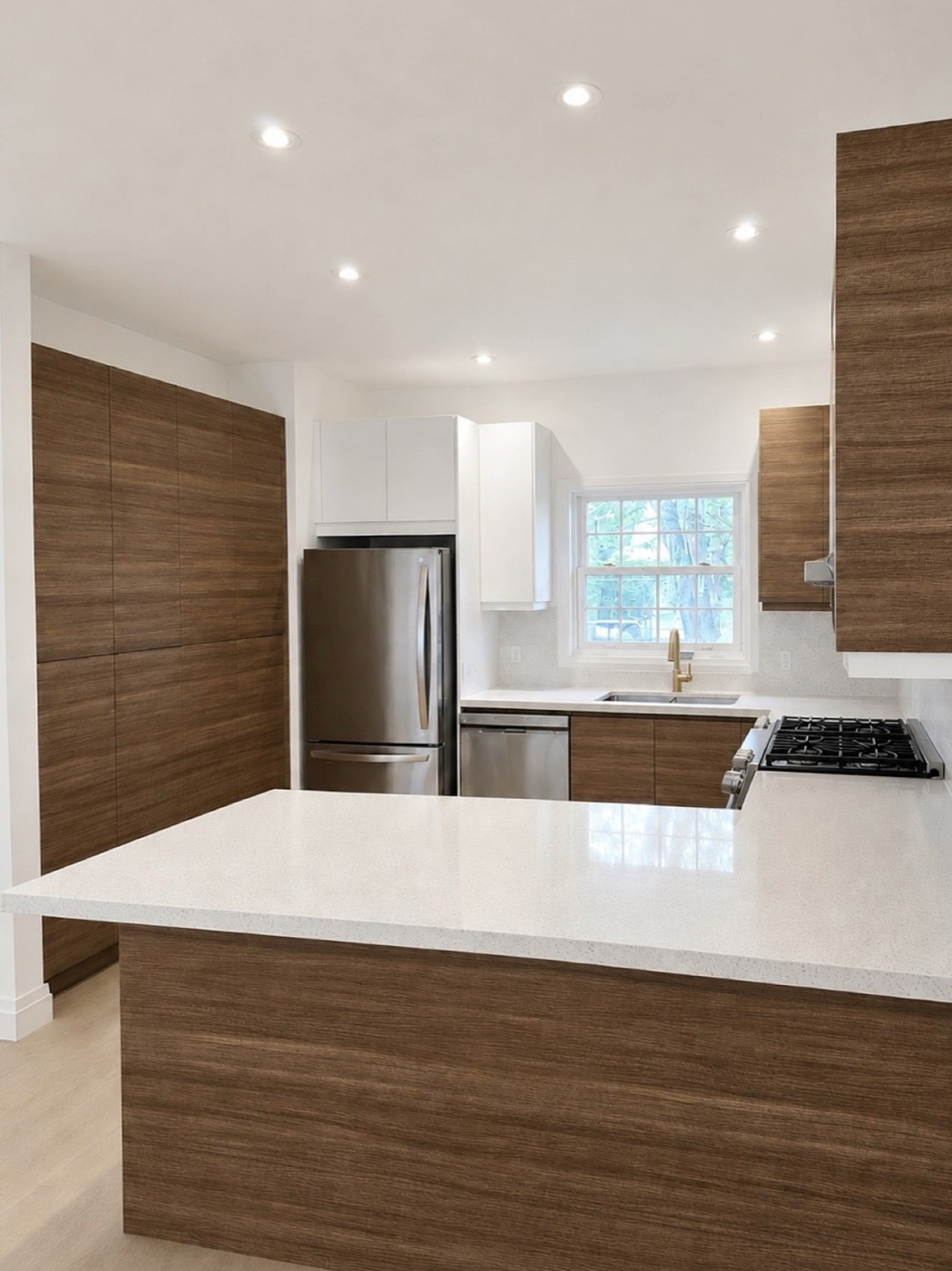
Stained cabinets are real wood or wood veneer with colour added to the wood itself, then sealed with a clear topcoat. Natural wood skips the colour: the wood is protected with a clear lacquer or a penetrating hardwax oil and left to show its own tone.
Painted vs stained vs natural wood at a glance
Here is how the three finishes compare on the points clients ask about most. Cost is relative only, because every project is priced individually.
| Factor | Painted | Stained wood | Natural / oiled wood |
|---|---|---|---|
| Look | Any colour; smooth and uniform, grain hidden | Visible grain in a chosen tone, pale to deep | True wood colour and grain; soft matte feel under oil |
| Everyday wear | Chips and scuffs show at edges and corners | Small scratches and dings blend into the grain | Fine scratches blend; spills need wiping up promptly |
| Repairs | Chips can be touched up; heavy damage means refinishing | Small marks blend well with touch-up colour | Scuffed areas can be spot-repaired and re-oiled locally |
| How it ages | Colour stays even; wear shows at contact points | Tone shifts gradually with light exposure | Warms and develops a patina; needs periodic re-oiling |
| Best suited to | Traditional, transitional and coloured kitchens; laundry rooms | Bars, libraries, traditional and warm modern rooms | Modern kitchens, islands, open shelving |
| Relative cost | Often a little more than a standard stained finish | Close to or below paint on common species | Premium species or veneer can exceed paint |
Looks: do you want colour or grain to lead?
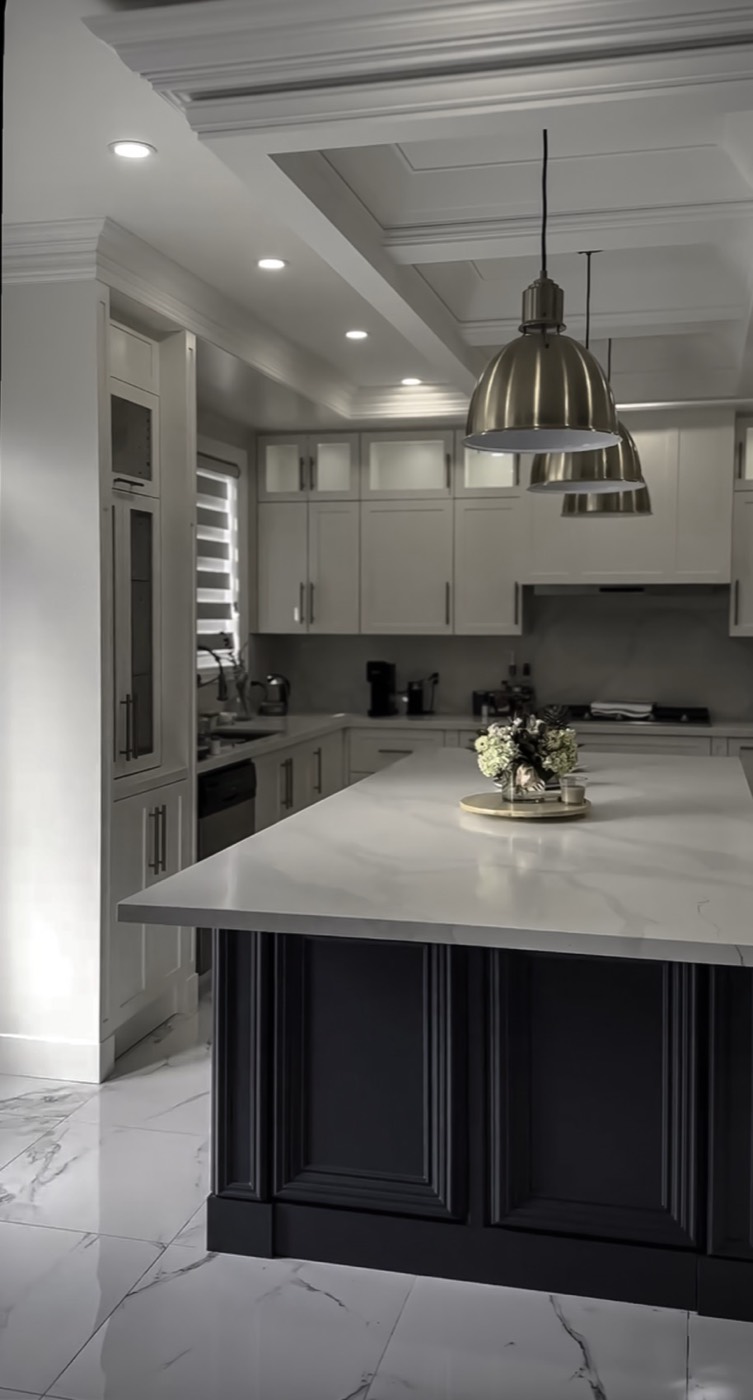
Paint gives you complete control of colour: crisp white, soft cream, deep navy or the soft sage of our Sage Green Kitchen in Markham. Because the surface is uniform, the door profile, hardware and countertop do the talking. Our Signature Painted Kitchens show the range, from white and greige palettes to a navy island with a farmhouse sink.
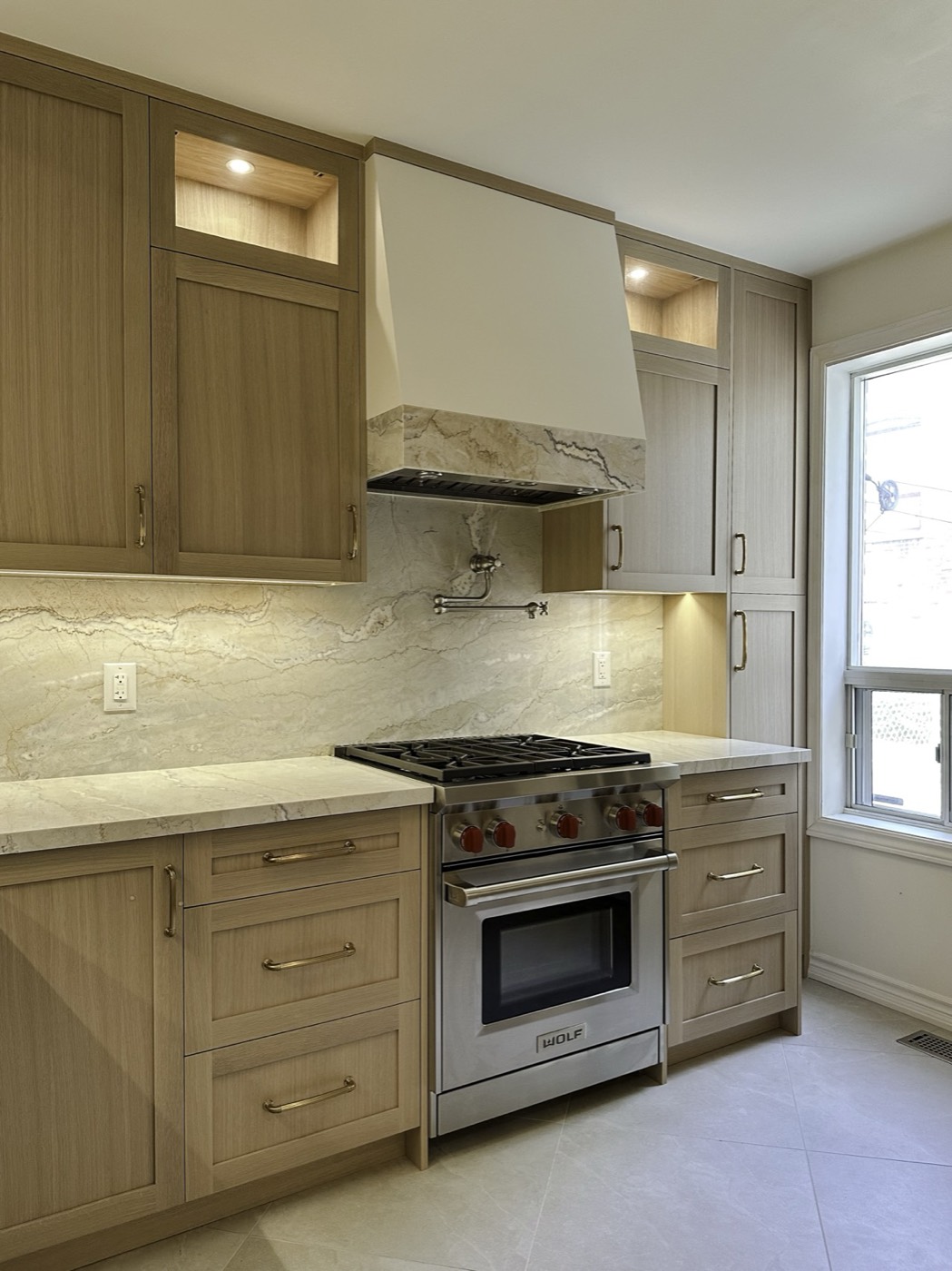
Wood brings texture and movement that paint cannot imitate. A stain lets you adjust the tone, as in the richly stained walnut of our Custom Wet & Dry Bars. A natural finish lets the species speak for itself: the Rift White Oak Kitchen runs continuous rift-cut grain across doors and drawer fronts under a natural matte hardwax oil. Stain behaves differently by species: open-grained oak takes it readily, while maple and cherry can blotch without careful preparation, so always approve a sample door first.
Durability, daily wear and how each finish ages
A quality sprayed painted finish is tough, but it is a layer of colour sitting on the surface. When a pot or a vacuum catches an edge, it can chip through, and chips are most visible on dark colours. Typical wear points are edges near the sink and dishwasher and around pulls.
Stained wood kitchen cabinets are more forgiving. The colour sits in the wood, so a light scratch reads as character rather than damage. Species plays a part too: white oak is a harder, more dent-resistant wood than walnut.
Time changes each finish differently. Paint keeps an even colour, and its age shows mostly at the contact points. Wood responds to light: most species warm or mellow over the first years, and you may notice a lighter outline where a cutting board leaned against a panel. Oiled wood develops a soft patina if it is refreshed when it looks dry.
Touch-ups and repairs
A small chip in a painted finish can be filled and touched up with matching colour, and done carefully it nearly disappears, although on a large flat panel in raking light a touch-up can still show. Serious damage usually means refinishing the door in the shop. Stained wood hides small marks well with touch-up colour. Oiled wood is easiest: a scuffed patch can be lightly sanded and re-oiled locally.
Whatever you choose, a few habits keep any finish looking good:
- Keep a record of the exact colour, stain, sheen and finish system in your project file
- Wipe up water promptly, especially around the sink and dishwasher
- Clean with a soft cloth and mild cleaner; avoid abrasive pads and harsh solvents
- Re-oil hardwax-oiled surfaces when they look dry or water stops beading
Hardwax oil vs lacquer on wood
With stained or natural wood, the next choice is the protective coat. A sprayed lacquer forms a film on the surface. It resists water, grease and stains well, needs little more than wiping, and comes in sheens from flat matte to gloss. The trade-off is repair: once a scratch cuts through the film, it is hard to blend, and the fix is often refinishing the whole door.
A hardwax oil soaks into the wood and hardens, so the surface still feels like wood rather than a coating. It gives the most natural, low-sheen look, which is why the Rift White Oak Kitchen uses it, and it repairs locally. It does ask more of you: spills should not sit, and busy surfaces need fresh oil from time to time. If you want the natural look with less upkeep, a clear matte lacquer is a sensible middle ground. Prefinished veneer, as on our Pure Oak Kitchen with its horizontal book-matched oak grain, is another route to a consistent wood finish.
Why painted cabinets belong on MDF (and the hairline at the joints)
Paint looks best on a surface that does not move. Solid wood expands and contracts with humidity, and Toronto's humid summers and dry, heated winters make that movement real. Under paint, solid wood can telegraph its grain and crack at the joints. That is why painted doors are best built on stable MDF, which stays flat and takes a seamless sprayed finish (see our guide to solid wood vs MDF cabinets). Stained and natural finishes need real wood on the face, solid or veneer, because MDF cannot be stained to look like wood.
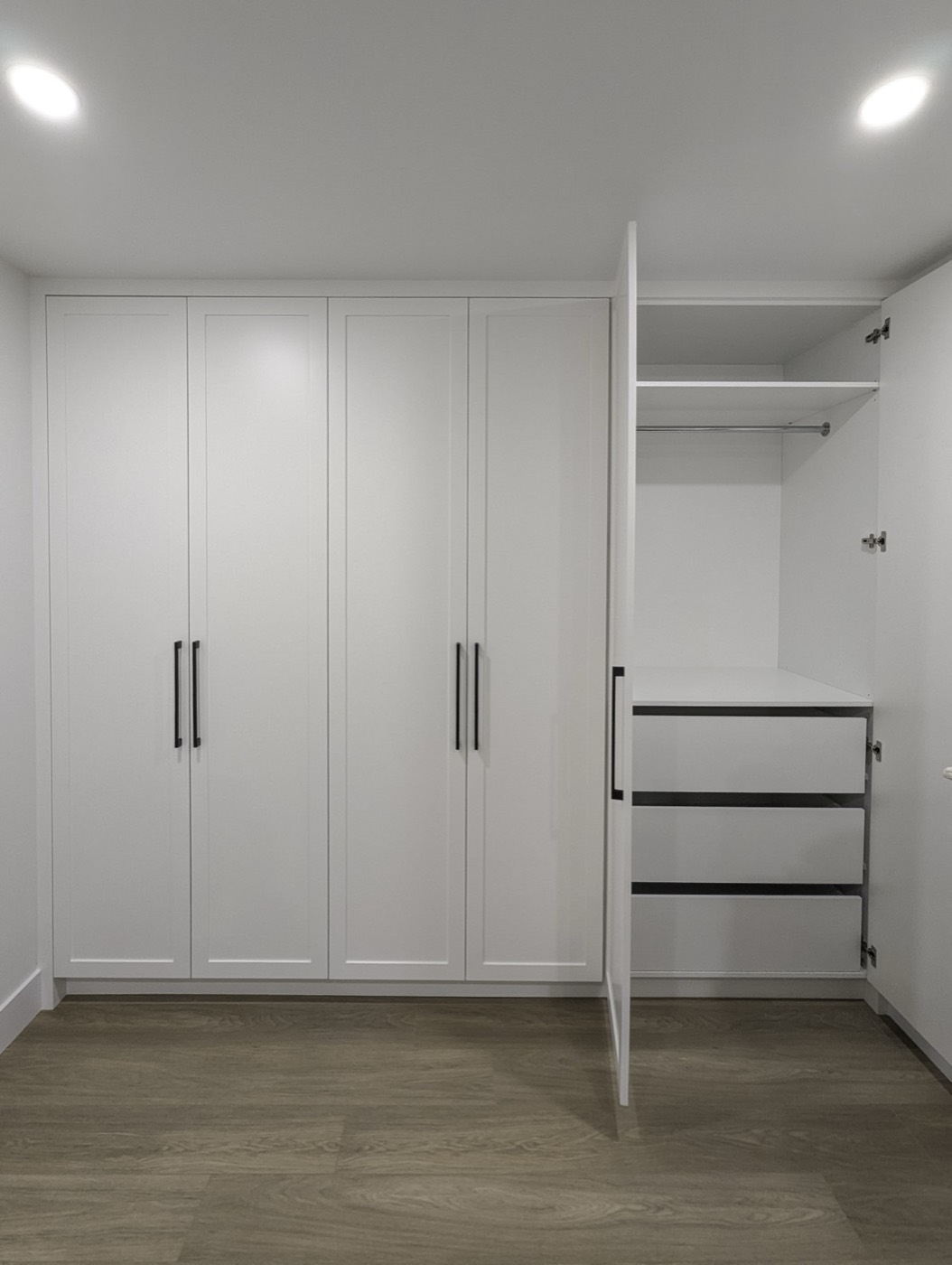
Worth knowing in advance: a five-piece painted door, such as a shaker with a frame around a centre panel, has joints where the frame parts meet. As indoor humidity changes through the year, a fine hairline can appear along those joints. It is normal and does not affect how the door works. If you would rather avoid it, a slab door, or a shaker-look door routed from a single MDF panel, has no joints to show. Our guide to cabinet door styles explains which profiles suit which finish.
Shop-sprayed vs site-painted cabinets
Where the finish is applied matters as much as which finish you pick. In a shop, doors and panels are sprayed in a controlled space, coats cure properly between applications, and edges and backs are finished before anything reaches your home. The result is an even sheen that has fully hardened before daily use.
Site painting, usually brushing or rolling existing cabinets in place, can be a budget refresh, but it is a different product. Adhesion depends entirely on cleaning, sanding and priming the old surface, brush marks and dust are hard to avoid, and the kitchen is out of action while coats dry. In a condo, spraying on site is rarely practical between ventilation, overspray and building rules, so check with your management first. For a new custom kitchen, shop finishing is the standard to expect, and it is how we finish painted kitchen cabinets in Toronto and across the GTA.
Relative cost: what makes one finish cost more
Every kitchen is measured and priced individually, so treat this as general GTA guidance for 2026 rather than a quote. Painted cabinets often cost a little more than a standard stained finish, because paint needs more preparation: priming, sanding between coats and multiple sprayed coats, each with curing time. Stained and clear finishes on common species tend to sit close to or below paint.
The exception is premium wood. Rift-cut white oak, walnut and book-matched veneer cost more in material and in grain-matching time, and can cost more than a painted kitchen. Our rift white oak vs walnut comparison covers both. In practice, finish is one factor among several; layout, door style, interior fittings and hardware move the budget just as much.
Which finish suits which home
The architecture of the house and the way you live usually narrow the choice quickly:
- Older Toronto homes: painted inset or shaker in cream, white or a heritage colour suits original trim; stained wood suits dark wood floors or panelling
- New builds in York Region, Peel and Halton: painted shaker in white or greige is the safe all-rounder; a wood island adds warmth to big open-plan rooms
- Condos: slab fronts in matte lacquer or light oak veneer keep a compact kitchen calm and easy to clean
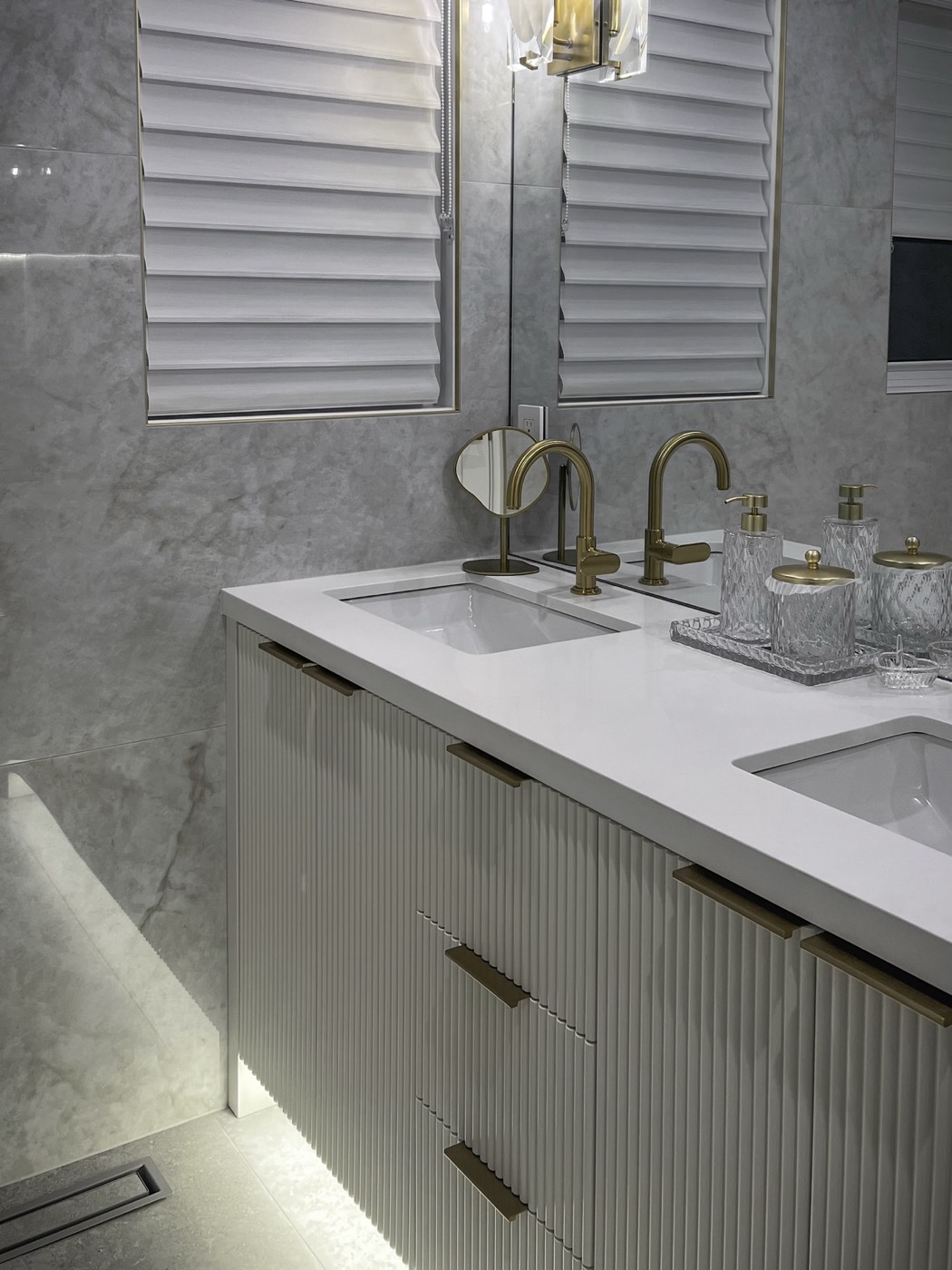
- Modern homes: rift white oak or walnut in slab or fluted fronts, under oil or matte lacquer
- Busy family kitchens: stained wood or a clear lacquer forgives everyday knocks; paint works too if you accept the occasional touch-up
- Vanities and laundry rooms: moisture comes first, so choose a sprayed lacquer, painted or clear, over a moisture-stable substrate; oil near a basin needs more care
Colour trends, two-tone kitchens and timeless choices
Colour trends move faster than finishes. Whites, creams, greige and natural oak have stayed popular for a long time, while bolder greens and blues come in waves. Wood tones date too, as the honey-orange oak of earlier decades shows, so a natural, lightly toned wood is the safer long-term choice.
You do not have to pick one finish for the whole room, and a two-tone kitchen is the easiest way to enjoy a trend colour safely: put it on the island or a bar, where refinishing a few doors later is simple. Combinations that work well:
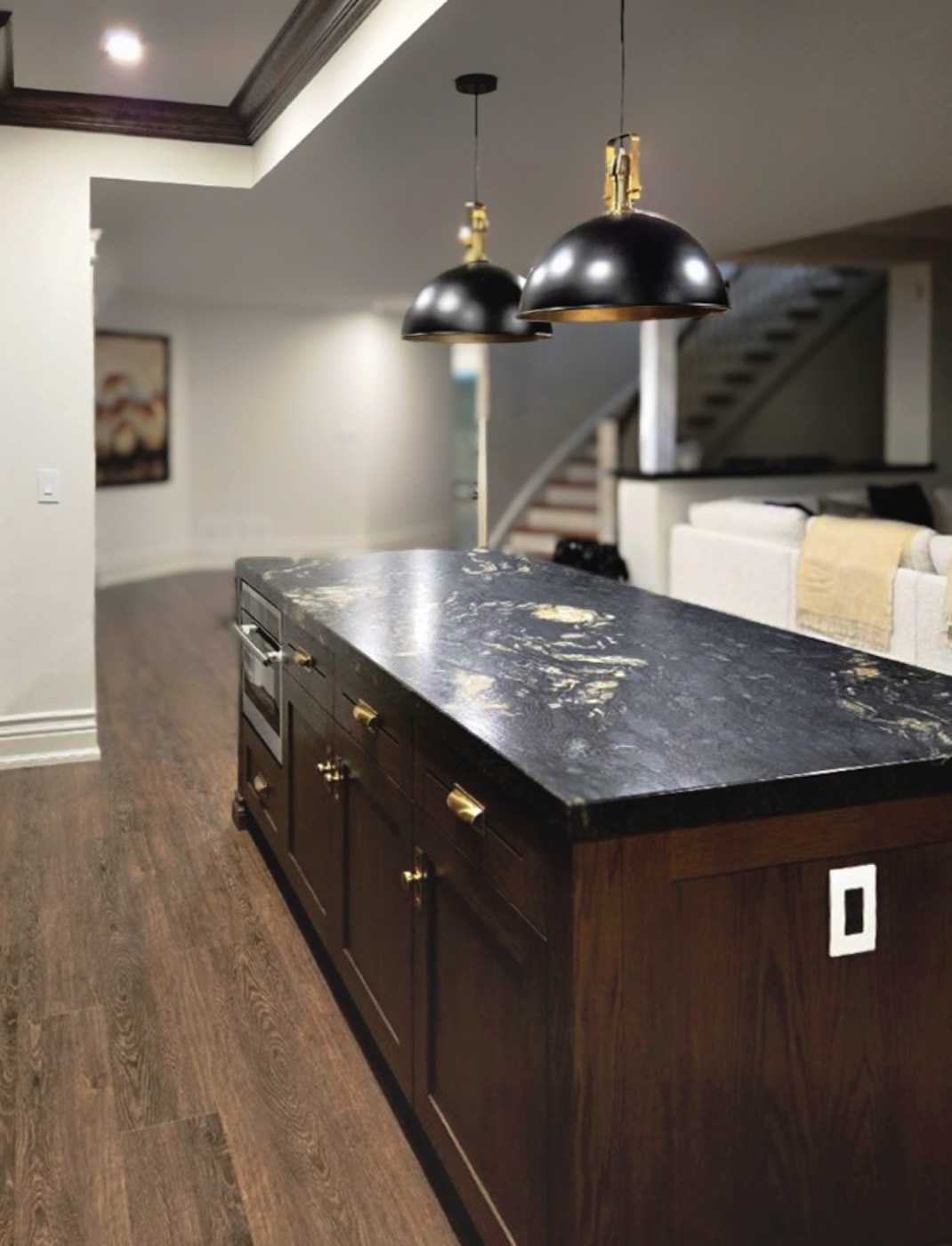
- A painted perimeter with a wood island, so the island takes the knocks and the walls stay light
- A coloured island against a white or cream perimeter, such as navy with white
- Painted cabinetry with natural wood accents, like the floating white-oak shelves in our sage kitchen
- Wood base cabinets with painted uppers, which hides scuffs low and keeps the walls bright
The bottom line
Painted cabinets give you colour and a smooth, classic surface, and they perform best on stable MDF with a shop-sprayed finish. Stained and natural wood give you grain, warmth and a finish that forgives daily wear, with hardwax oil for the most natural feel and lacquer for the least upkeep. Many of the best kitchens use both. To see what suits your home, explore our custom kitchens or book a free consultation and we will talk it through in your space.
Sources & further reading
Rules and requirements change; always confirm the specifics for your project with your municipality and licensed trades.
Related pages
Thinking about a project?
Let’s turn the idea into cabinetry.
Book a free consultation and we’ll talk through what’s possible for your space across the GTA.