
Solid Wood vs MDF Cabinets: Which Should You Choose?
Solid wood, MDF, or a mix? A clear, no-nonsense look at how the two materials actually perform in kitchens, vanities and built-ins across the GTA — and which is the right choice for your project.
Written by the Panda Reno workshop — GTA custom cabinetmakers designing, milling and finishing in-house since 2018.
It is one of the first questions we get when someone starts planning custom cabinetry: should it be solid wood or MDF? It sounds like a simple quality question — wood good, MDF cheap — but the honest answer is more useful and more interesting than that. Both are legitimate cabinetmaking materials, each is better than the other for specific jobs, and the best kitchens and built-ins almost always use both. Here is how they actually compare, and how we decide which goes where.
A quick definition first. "Solid wood" means boards of real timber — oak, walnut, maple and so on. "MDF" (medium-density fibreboard) is an engineered panel made from fine wood fibres compressed with resin into a dense, perfectly uniform sheet. Most quality "wood" cabinetry is actually a considered mix of the two, plus veneered panel. The question is rarely all-one-or-the-other.
Where solid wood wins
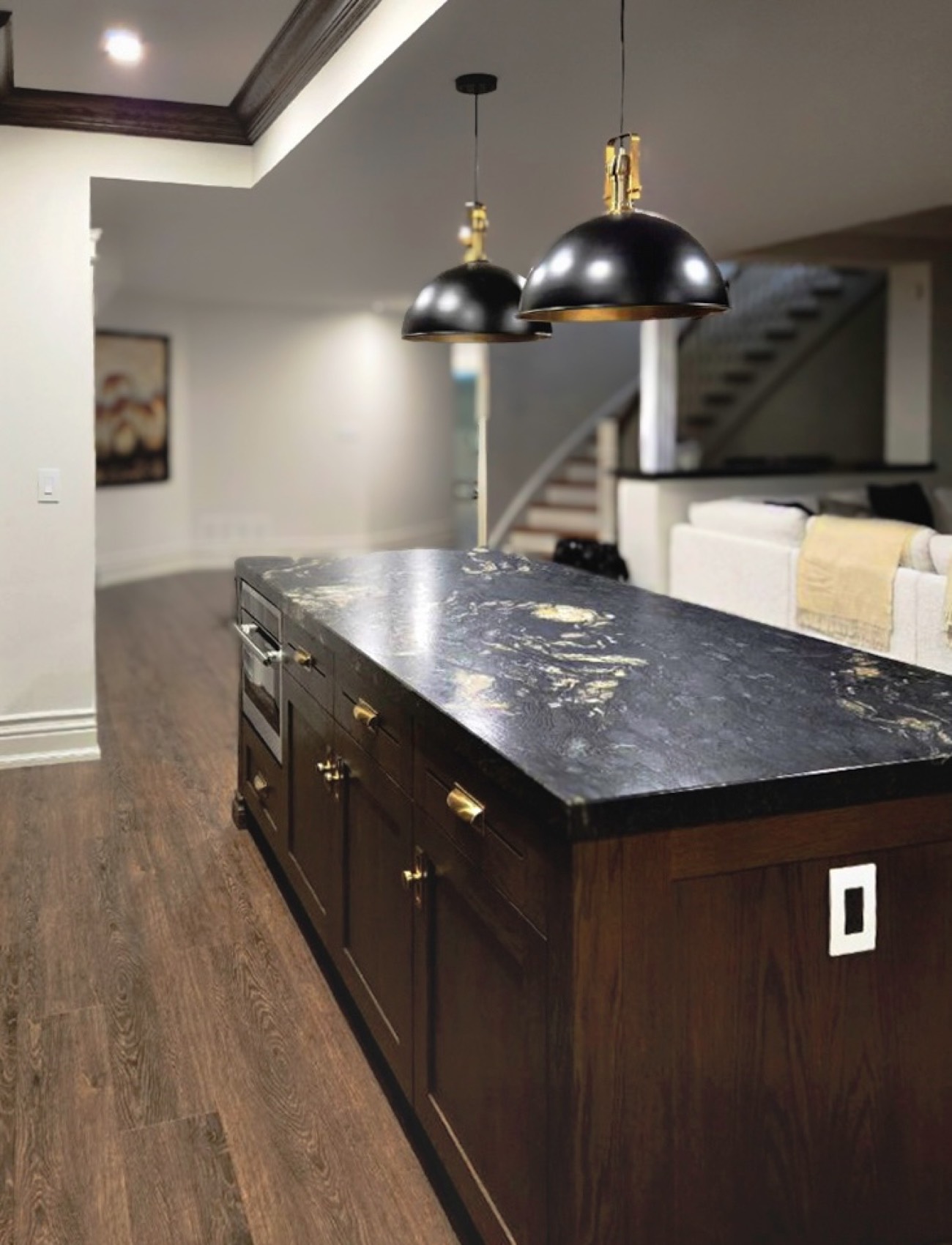
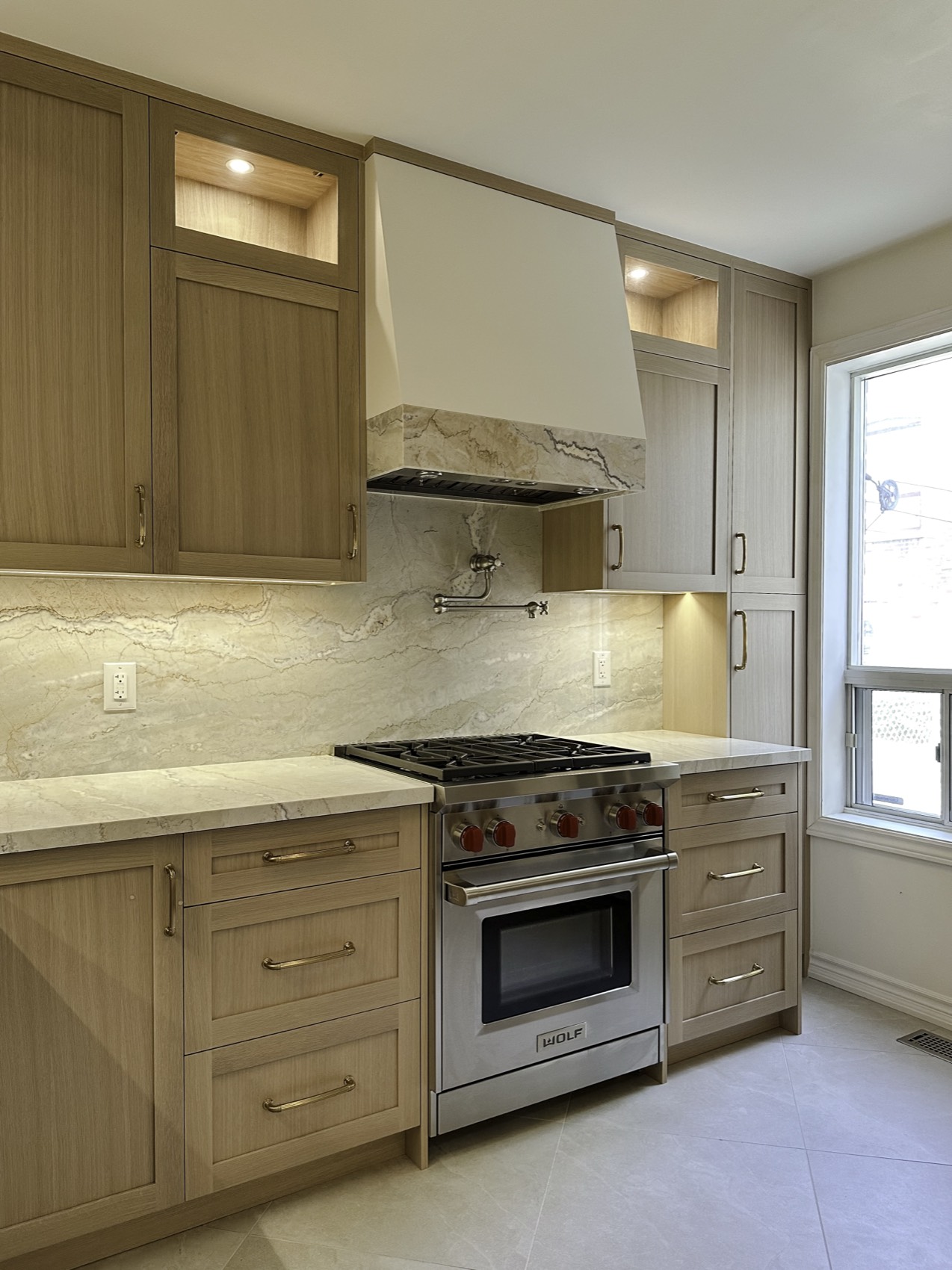
Solid wood is unmatched where you want the depth, grain and warmth of real timber on show — a rift white-oak or walnut kitchen, a furniture-style vanity, open shelving, a statement island. It can be sanded and refinished, it ages with character, and nothing engineered quite replicates the look and feel of the real thing under a natural or oiled finish.
It is also the right choice for parts that take stress or show an exposed edge: door frames and rails, face frames, mouldings and trim. Solid wood holds a screw and a joint well and gives crisp, durable edges where MDF would be vulnerable.
Where solid wood struggles
Wood is a natural material, so it moves. It expands and contracts with humidity, which is why a large solid-wood panel can cup, crack or open at the joints over the seasons — a real risk in a kitchen or bathroom with swings in moisture and temperature. That movement is also why solid wood is a poor base for a painted finish: the seams telegraph and hairline cracks appear at the joints over time.
It is also more expensive, both in material and in the skilled labour to work it well. For a large painted door, solid wood is usually the wrong tool for the job.
Where MDF wins
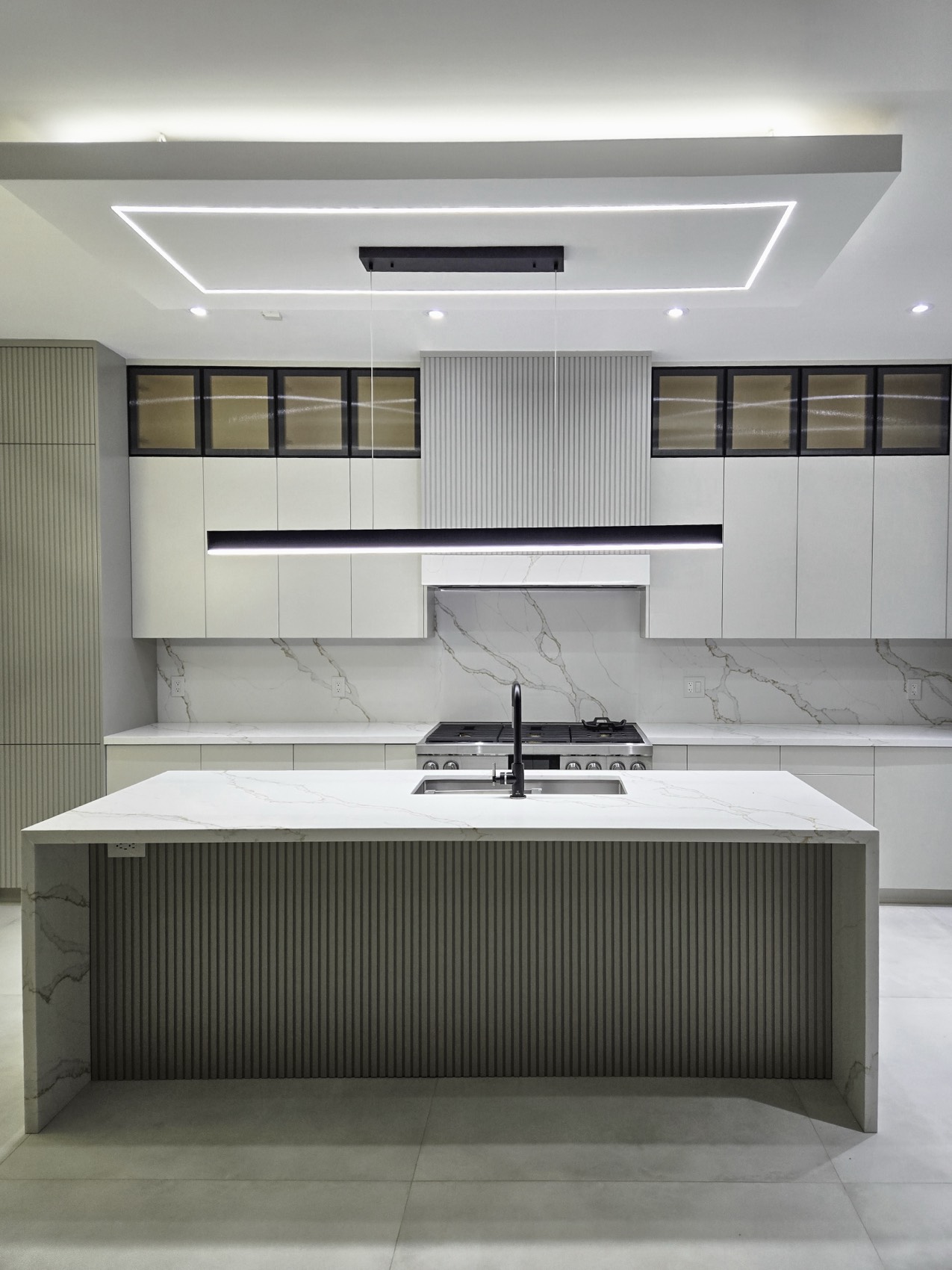
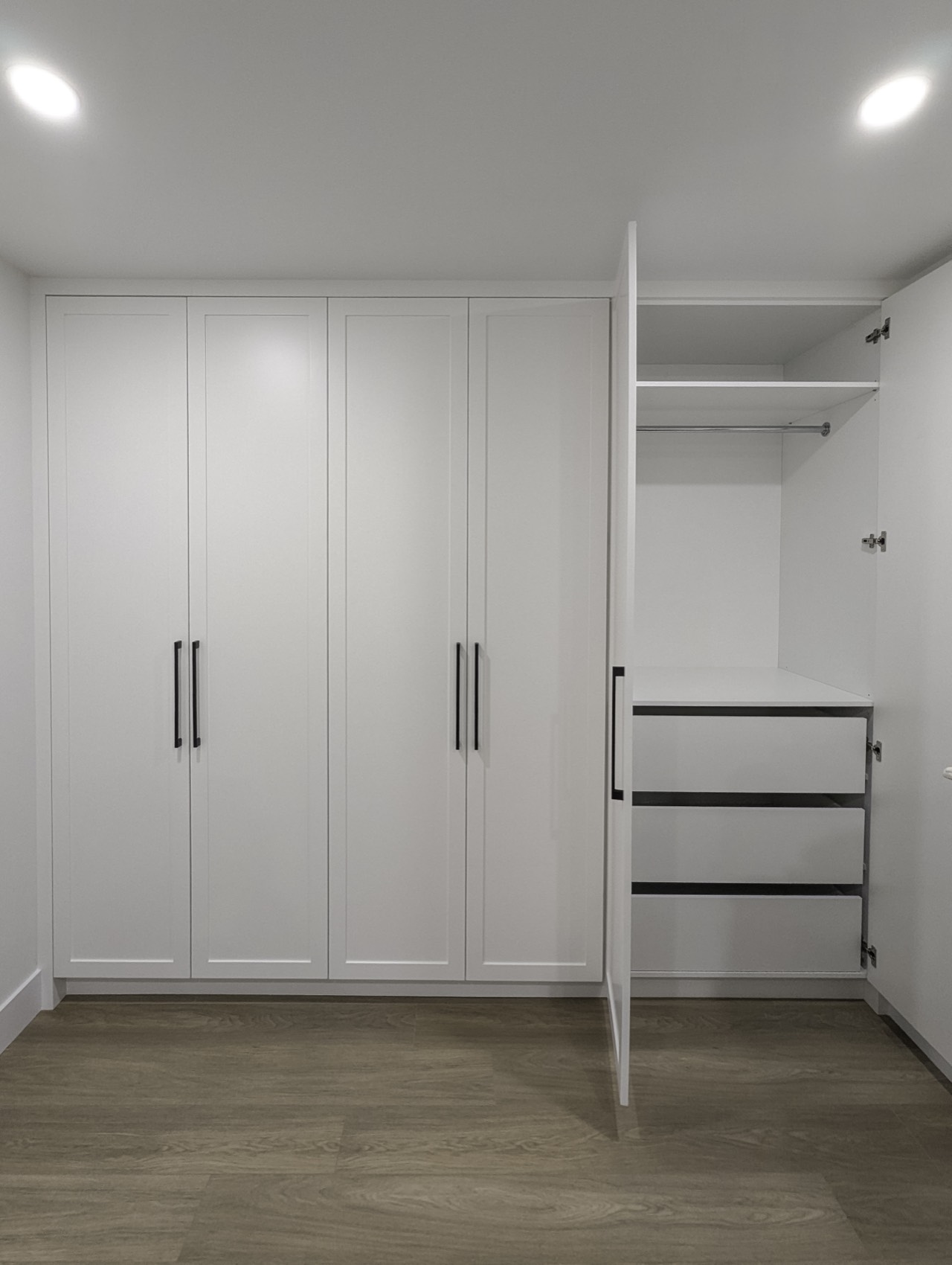
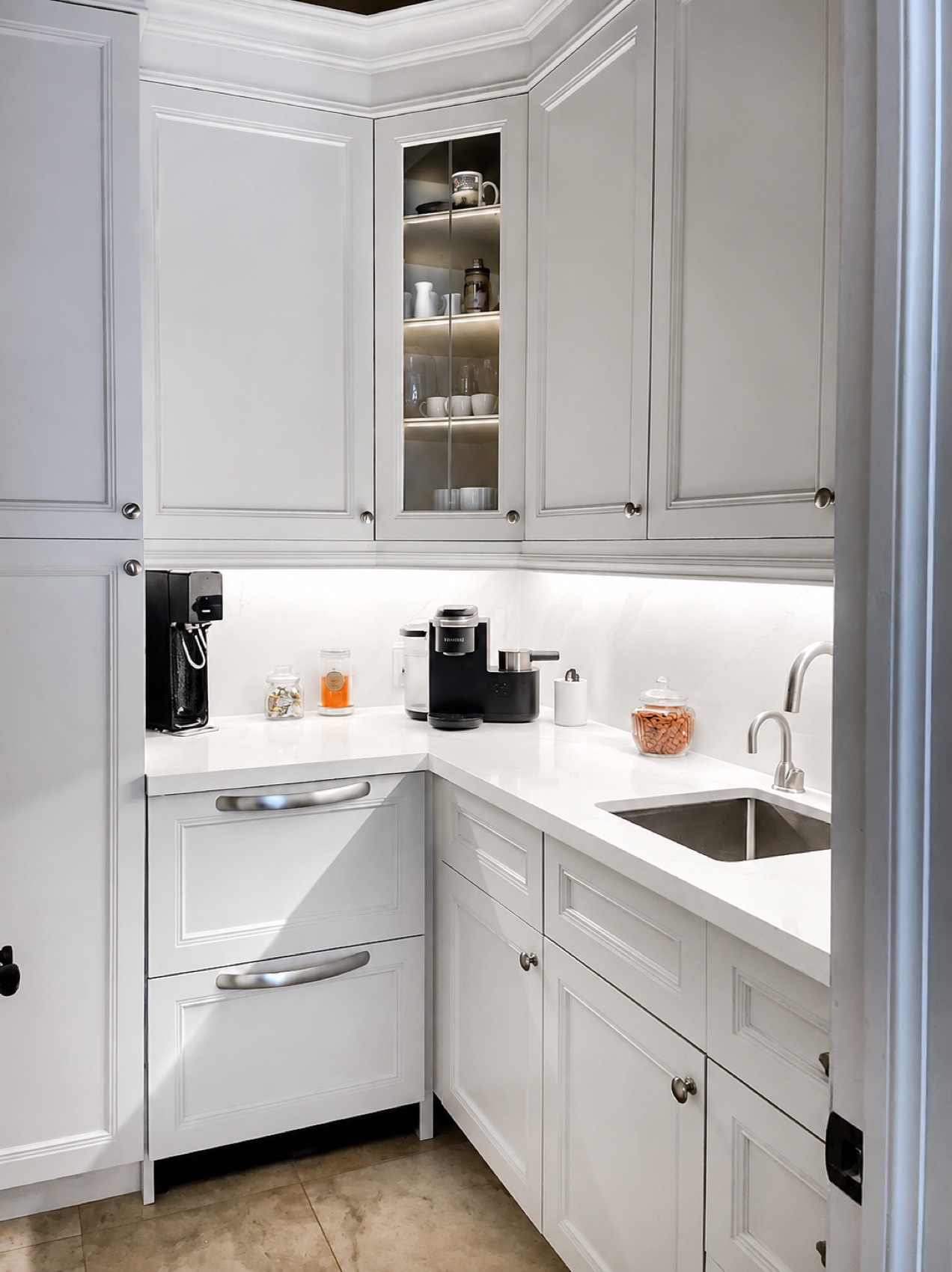
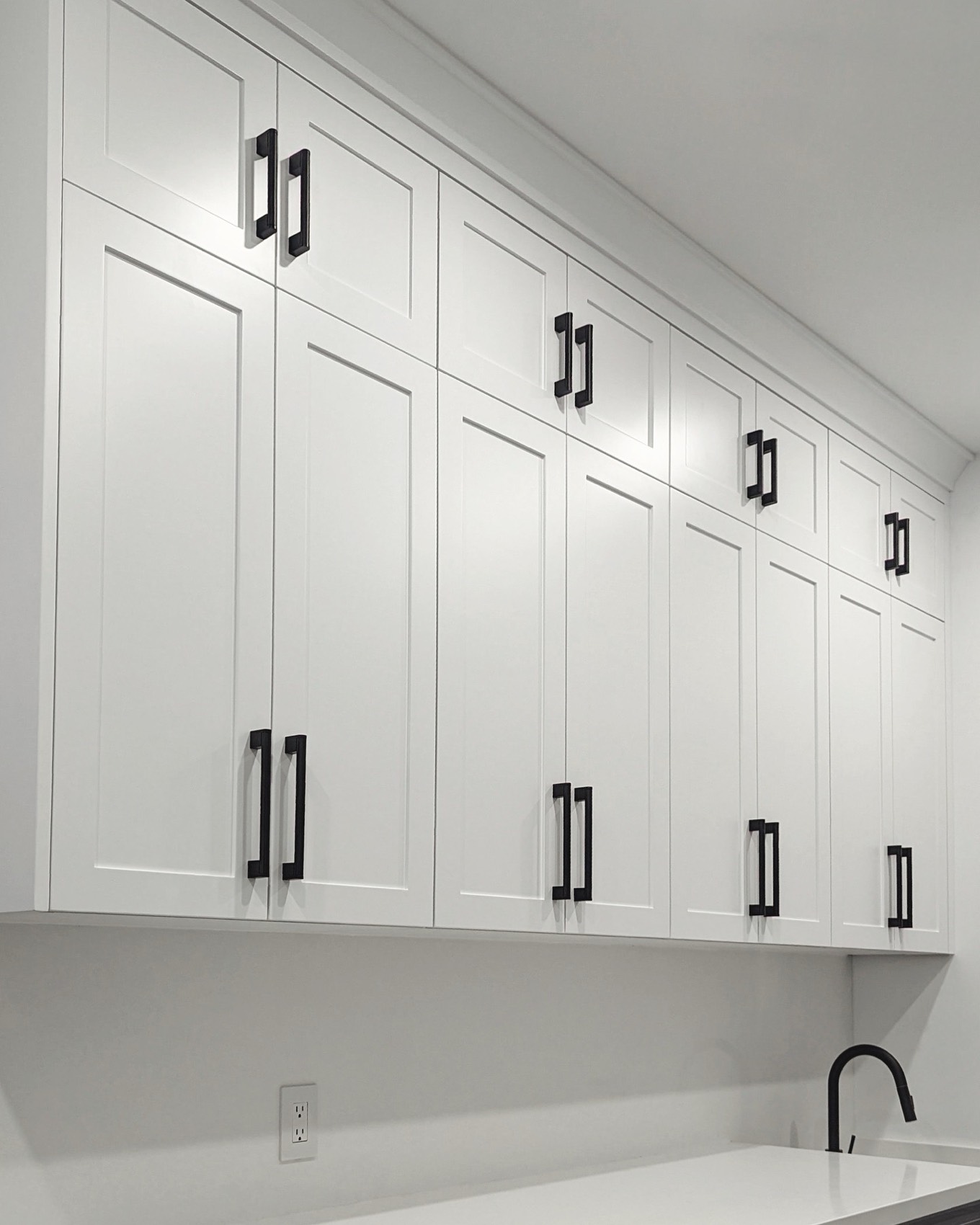
MDF's superpower is stability. Because it is uniform and has no grain direction, it does not expand, contract or crack the way solid wood does, and it stays dead flat. That makes it the best possible base for a painted finish: a hand-sprayed MDF door gives a smooth, seamless, factory-quality surface with no telegraphing joints — which is exactly why almost all high-end painted kitchens use MDF fronts, not solid wood.
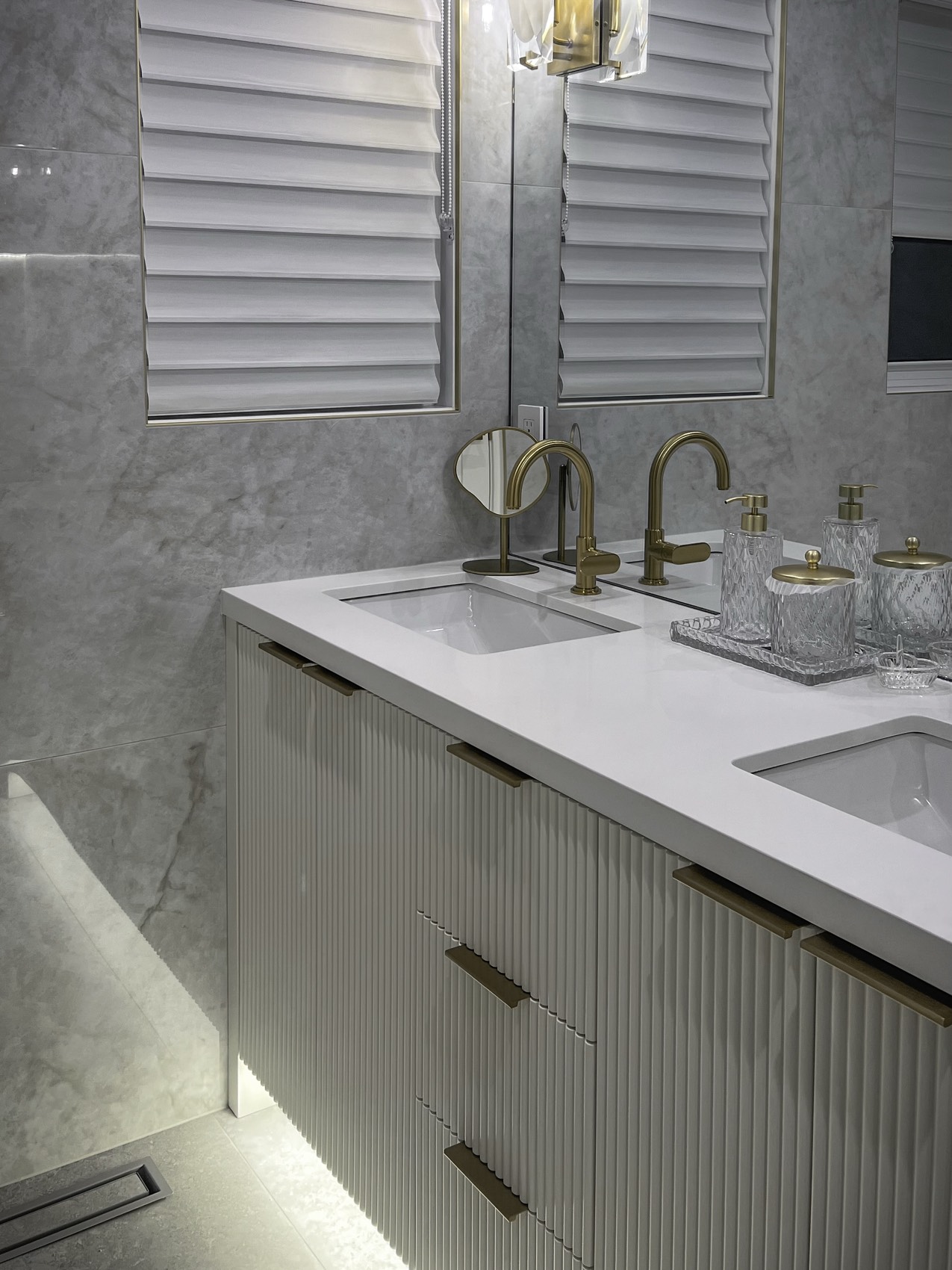
It also machines beautifully. Fluted, reeded, routed and shaker profiles come out crisp and consistent, and MDF is more affordable than solid hardwood for large flat areas. For painted cabinetry, quality MDF is not a compromise — it is the correct, premium choice.
Where MDF struggles
MDF's weakness is water and impact. Standard MDF will swell irreversibly if raw edges get soaked, and it does not hold a screw in its edge as well as timber, so it needs to be sealed, finished and built properly — particularly around sinks, dishwashers and bathrooms, where we use moisture-resistant grades. It also can't be stained to look like real wood; if you want visible natural grain, that's a job for solid wood or wood veneer, not MDF.
In other words, MDF is superb painted and sealed, and the wrong choice anywhere you want exposed natural timber or a raw edge exposed to water.
The real answer: use both
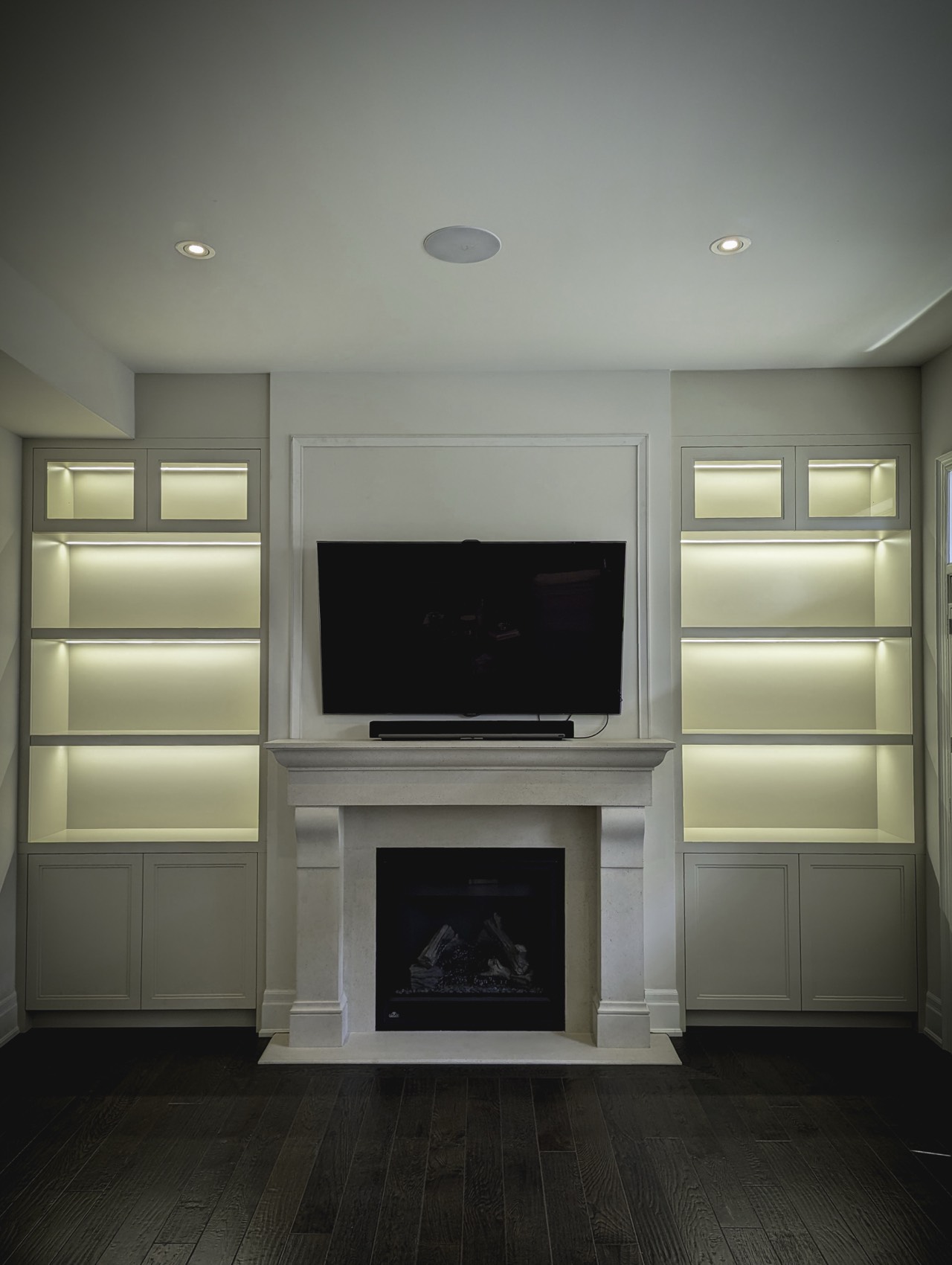
In practice, a well-built kitchen or vanity is a considered combination. Painted doors, panels and end panels in MDF for a flawless, stable finish; solid wood for face frames, exposed edges, mouldings and anywhere real grain is on show; and wood veneer over a stable core for large natural-wood surfaces like a rift-oak run, so you get the look of solid timber without the movement. Cabinet boxes are typically a quality plywood or furniture-board for strength and stability.
So the honest guidance is: if you want a painted kitchen, MDF fronts are the premium choice and solid wood would actually be worse. If you want the warmth of natural wood on show, that's solid wood or veneer. Most of our projects use each where it performs best — and that, more than the material label, is what separates cabinetry that still looks and works right in twenty years from cabinetry that doesn't.
How we decide on your project
At the design stage we walk through each element — doors, boxes, panels, shelving, trim — and specify the right material for each, based on the finish you want, where moisture and wear will hit, and your budget. Because we design, mill and finish everything in our own shop, we're not steering you toward whatever a catalogue happens to stock; we choose what will genuinely perform best and explain why.
The result is cabinetry that's honest about its materials and built to last — whether that's a fully painted MDF-and-wood kitchen, a natural rift-oak run in veneer and solid wood, or a mix across a whole home.
Thinking about a project?
Let’s turn the idea into cabinetry.
Book a free consultation and we’ll talk through what’s possible for your space across the GTA.
Book a consultation