
How Much Does a Custom Bathroom Vanity Cost in Toronto? (2026)
Typical 2026 price ranges for custom bathroom vanities in Toronto and the GTA, what is included, what drives the cost up or down, and how to get an accurate quote.
Written by the Panda Reno design and workshop team: custom cabinet makers designing, building and installing across the Greater Toronto Area.
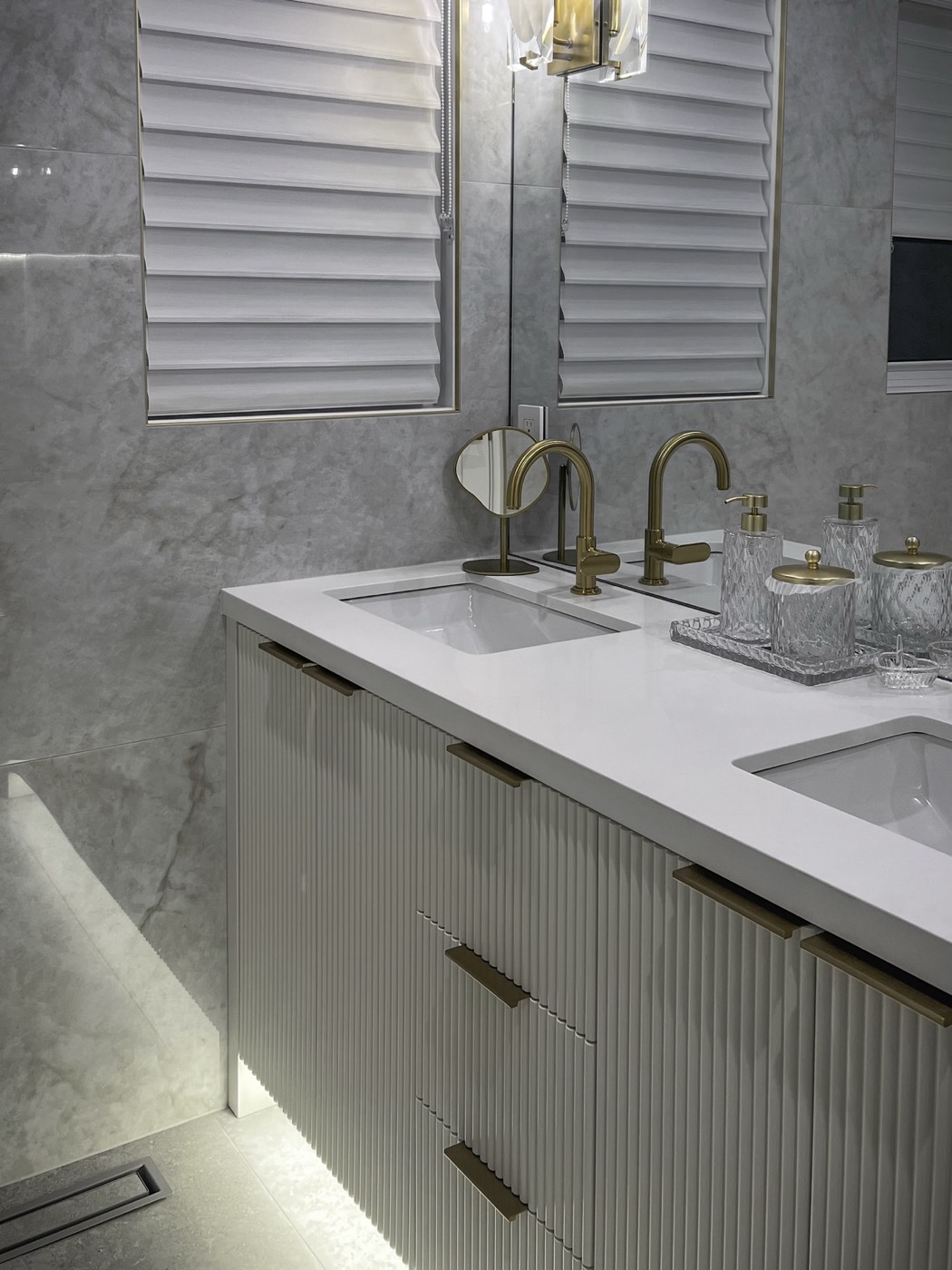
A bathroom vanity is a small piece of furniture that works incredibly hard. It is opened dozens of times a day, splashed constantly and expected to look good for years. That is why more GTA homeowners are choosing custom vanities over off-the-shelf units, and why the first question is usually the same: what does a custom vanity actually cost?
Below are realistic 2026 price ranges for custom vanities in Toronto and the GTA, what those numbers include, what pushes them up or down, and how to get a quote you can rely on. As with all our guides, these figures are general guidance, not quotes. Every vanity is measured and priced individually.
The short answer
As a 2026 guide for the GTA, the custom vanity cabinetry itself, designed, built and installed, typically falls into these ranges. Countertops, sinks, faucets and plumbing are usually priced separately and are covered below.
| Vanity type | Typical width | Cabinetry range (GTA, 2026) |
|---|---|---|
| Single vanity | 24–36 in | About $2,500 – $5,000 |
| Large single or small double | 42–60 in | About $4,000 – $7,000 |
| Double vanity | 60–84 in | About $4,500 – $9,000 |
| Statement vanity: solid wood, fluted, floating with lighting or integrated stone | Any | About $8,000 – $15,000+ |
What is included, and what usually is not
A custom vanity quote normally covers design, the cabinet box, doors and drawer fronts, the finish, interior drawer systems and hinges, and installation. Depending on the maker, it may also include coordinating the countertop.
Items usually priced separately include the countertop and sink, the faucet and drain, plumbing connections by a licensed plumber, mirrors or medicine cabinets, wall lighting and any electrical work for in-drawer outlets or toe-kick lighting. When comparing quotes, make sure you are comparing the same scope.
What drives the price of a custom vanity
Two vanities of the same width can differ in price by thousands of dollars. These are the factors that make the biggest difference:
- Size, and the number of drawers versus doors. Drawers cost more than doors but are far more useful in a vanity.
- Plumbing-friendly drawers. U-shaped drawers that wrap around the trap give you more storage but take more work to build.
- Material: painted MDF and quality veneers are usually more cost-effective than solid wood.
- Finish: multi-coat sprayed lacquer or a hand-applied oil costs more than a laminate or melamine surface, and lasts better.
- Door style: fluted, reeded and inset fronts take more machining and fitting than slab or shaker.
- Floating versus floor-standing: floating vanities need solid wall blocking and careful plumbing planning.
- Integrated extras: toe-kick lighting, in-drawer outlets for hair tools, built-in towel storage or tall linen units.
- Site conditions: moving drains or supply lines adds plumbing cost, especially in condos.
Countertops and sinks: the other half of the budget
The top can cost as much as the cabinetry on a high-end vanity. Quartz is the most popular choice for its durability and low maintenance; for a single vanity a quartz top commonly runs roughly $800 to $2,000, and for a double vanity roughly $1,500 to $3,500, depending on the slab, edge profile and sink cut-outs. Natural marble, large-format porcelain and mitred or waterfall edges cost more.
Sink choice affects both price and the cabinetry. Undermount sinks are the most common and easiest to clean. Vessel sinks change the vanity height. Integrated stone basins, like the floating slab vanity in our Spa Bath Vanities project, are beautiful but need precise coordination between cabinet maker and fabricator.
Floating vanities: what to know first
Floating, wall-hung vanities make a bathroom feel bigger and are easy to clean underneath. They also need planning: solid blocking inside the wall to carry the weight of the cabinet, stone and everything on it; plumbing that comes out of the wall rather than the floor; and a decision on height before the wall is closed.
If you are renovating, this is easy to plan for. If you are replacing a vanity without opening the wall, a floor-standing or furniture-style vanity may be more practical, or the wall may need some work first.
Built for a wet room
Bathrooms are hard on cabinetry: humidity from showers, water on the counter, and cleaning products every day. A well-made custom vanity is built for that. That means moisture-resistant substrates, sealed edges where water gathers, a durable finish and hardware that will not corrode.
Material choice matters here. Our guide to solid wood vs MDF explains why stable engineered panels are often the better choice for painted vanities, while solid wood is best kept to frames and accents. Good bathroom ventilation protects any vanity, custom or not.
Custom vs off-the-shelf: when custom is worth it
An off-the-shelf vanity from a big-box store can cost a fraction of custom and is a reasonable choice for a rental, a basement powder room or a quick refresh. Custom becomes worth it when the space is unusual, when storage matters, or when the bathroom is part of a renovation you plan to live with for years.
Typical reasons our clients choose custom include: a bathroom width that standard sizes do not fit, as is common in older Toronto homes; a double vanity squeezed into a tight wall; a need for real drawer storage rather than one cupboard; or wanting the vanity to match the millwork in the rest of the house.
How to get an accurate vanity quote
The more you can share up front, the more accurate the first estimate will be. Have these ready:
- The wall width and ceiling height, plus photos of the space
- Where the drain and supply lines are, and whether they can move
- Single or double sinks, and the sink style
- Countertop material, if you have one in mind
- Drawers versus doors, and any tall storage you want
- A few inspiration photos for style and finish
Ways to save without cutting corners
If the numbers are higher than you hoped, there are smart ways to bring them down without compromising how the vanity performs:
- Choose painted MDF or veneer rather than solid wood for large panels
- Use fluting or a statement finish on the drawer fronts only, not the whole vanity
- Keep plumbing where it is
- Pick a standard quartz over natural marble
- Design one generous drawer stack rather than many small drawers
The bottom line
In 2026, a custom vanity in the GTA typically runs from about $2,500 for a simple single vanity to $9,000 or more for a well-appointed double, before the top, sink and plumbing. Statement pieces go higher. If you would like a number for your own bathroom, explore our custom vanities or book a free consultation. If you are west of the city, see our page on custom vanities in Oakville.
Related pages
Thinking about a project?
Let’s turn the idea into cabinetry.
Book a free consultation and we’ll talk through what’s possible for your space across the GTA.